
Council Approved Dropped Kerb Contractors
Need your kerbs dropping for easy access to your property or driveway?
We offer same day quotations for all your drop kerb needs
EXCELLENT Based on 44 reviews
 Posted on Google
 Hugh OwensVery impressed with the service and efficiency of the admin and onsite team. Job well done!Posted on Google
 Natalie SlackGreat experience with this company, efficient process from start to finish and very happy with our new dropped kerb. Would highly recommend. Thank you.Posted on Google
 Sarah LouiseGreat communication, competitive pricing, everything was straight forward, the lads arrived on time and worked hard to complete on time. Would definitely recommend them 👍Posted on Google
 lewis LonghurstReally professional service from start to finish. They sorted all permits out themselves and completed all the work in one day to a very high standard. Really good company to go with.Posted on Google
 Debbie KingFrom first contact with Dave he explained everything clearly and was always very responsive to questions. The work was carried out by very pleasant work men who were proffesional and polite. We are very pleased with end result and would highly recommend.Posted on Google
 fiona ParkerQuote was really competitive in comparison to Council and works completed very quickly. Dave was really helpful, and job approved quickly. Contractors were polite and hardworking. Very happy with the result and would definitely recommend.Posted on Google
 JakeWas quoted a ridiculous price by the council so got in touch with these guys and they have been spot on. A fair price and I'm chuffed with the work they've done. Would definitely use them again for any future workPosted on Google
 Carole BurrowesThank you to all involved. The company very efficiently took care of all the permit and approval paperwork with the local authority. They then expertly removed the old Kerbs and paving, fitted new dropped Kerbs and perfectly re-laid the paving – sloping to align with the new Kerbs. Everything left clean and tidy. They know their business and we thoroughly recommend their services.Verified by TrustindexTrustindex verified badge is the Universal Symbol of Trust. Only the greatest companies can get the verified badge who has a review score above 4.5, based on customer reviews over the past 12 months. Read more
We are fully licenced and insured drop kerb contractors, partnering with the local council and Highways Authority to carry out every job in compliance with all essential regulations.
In most cases you don’t need to apply for anything from the council, we take care of all of that for you. We will submit the application and you will receive an email from the council on approval.
Dropped kerbs are a legal requirement for anyone who wants to drive on the pavement onto their property.
Access to a highway must be made from a residential or commercial driveway.
It permits vehicles to cross the pavement between a driveway or road. If you wish to drive across the pavement onto your property, it is a legal requirement.

Recent Installations
A kerb drop is a great way to improve your property’s accessibility and to keep people from parking in your driveway.
Law governing driveway access says: To drive your vehicle over the footway into your driveway from a highway, you must have a vehicle crossing.
If you do not, you must never drive over the footway. If you do not, you must not drive over the footway. If you do so, you are breaking the law and enforcement action may be taken to stop such practice.
The pavement may need to be strengthened in front of the property, and in many cases, it may be necessary for lampposts, manhole covers and various other street furniture to be moved.

Drop Kerb Experts in Newark-on-Trent
For lots of people, parking outside their own house can be both a cause of stress and come at a monetary cost if you need to buy a resident’s permit.
In particular urban regions, it can continue to be difficult to find a spot to leave your car close to home.
A kerb drop is a legal necessity if you want to drive over the pavement onto your residential or commercial property.
Access from residential or commercial driveways must include a vehicle crossover.
Kerb dropping allows vehicles to cross the pavement from the road to a driveway and it is a legal requirement if you want to drive across the pavement onto your property.
We have years of experience installing drop kerbs as well as making applications for the necessary planning permission. We can work with your county council to put in a drop kerb, while adhering to all regulations.
Either you can ask your local council about approval for a dropped-kerb near your property or we can file a formal application to your local authority.
We are members in good standing of the Streetworks Qualifications Register. The SWQR has details of qualified providers, who have achieved the required qualifications in relation to New Roads and Street Works Act91. This is important for any provider digging a highway.
We focus on delivering a product which is perfect the first and only time. We make sure we offer affordable, sustainable solutions that will last by investing in high-quality equipment and processes.
We pride ourselves on our exceptional workmanship and customer care and we ensure that each and every job is carried out to the highest quality standards.
Our team will come to your location and do a free, no-obligation survey. Our surfacing contractors can then fully understand your requirements and offer an accurate and reasonable quote.
Local Kerb Dropping Contractors
The massive growth in interest for off-street parking has seen a growing number of people drop kerbs to establish car standing at the front of their homes.
Direct Line home insurance research has shown that off-street parking can be a valuable feature that increases the property’s market price. Combining this with the increasing restrictions on parking in residential areas, planning applications for kerb have dropped dramatically over the past few years.
However, adding car space to the front door of your home may increase its marketability. There are many things to think about, not to mention environmental issues and flooding.
When you switch out a front lawn with hard standing, rain can no longer absorb into the ground. As more people do this, the likelihood of flooding increases. So it’s crucial to include drainage into your plans.
If you want to remove a kerb from your property in order to allow a car to cross the pavement, planning permission will normally be required. This is due to the fact that the pavement might need to be reinforced to take the weight of motor vehicles and help prevent them from damaging the surface or any pipes or cables underneath. This is done to ensure that other highway users are not at risk from the new access.

To find out if your application is required, contact your local government. Costs for applying depend on the location.
You will need to contact a specialist in your area to complete the work if permission is granted.
It’s certainly not a DIY job as the council will have requirements that service providers must meet. Several will only allow you to use their endorsed contractors, while others allow you to use your own, as long as they are certified to the requirements of the New Roads and Street Works Act 1991, and carry public liability insurance. In this instance, the council might charge an additional fee for highway assessments. Contact us or check Our FAQ’s for more information.


Newark-on-Trent Vehicle Crossover Experts
However first it’s worth establishing if permission is likely to be granted. Below is a list of considerations. If any among these criteria is not really met, planning permission is probably to be denied:
- Your front garden must be large enough for you to park your vehicle completely on your property.
- The kerb must be at minimum 4.8 m from the front of your house; or 6m if the parking area is in front of a door or garage.
- The parking area should be at least 2.4 m wide.
- The proposed access to your property should be more than 10m away from a road junction; 15m away from busy junctions or on primary roads.
- It has to be at least 1.5 m away from street lamps and other street furniture.
- It must meet visibility guidelines; this depends on the type of road.
- Suitable drainage must be provided to remove the surplus surface water.
The extraction of tree roots should be avoided. - The incline from your property to the road must not be too steep.
- Finally, you as the property owner must consent to the kerb being dropped; for example, a renter can not apply on their landlord’s behalf.
We cover all these local areas and lots more- Newark-on-Trent & Beacon Hill, New Balderton, Hawton, Balderton, Kelham, Winthorpe, South Muskham, Farndon, Averham, Coddington
We Install Driveways Too!
If you need a dropped kerb you probably need a driveway too.
We can give you a quote for:
Resin Drives
Tarmac Drives
Concrete Drives
Block Paving Drives
Imprinted Concrete
Ask us for a free quote!
Q and A’s
Prices will vary depending upon your location, pavement width, number of kerbs to drop, and whether you want to extend an old dropped kerb. Some councils and contractors offer an extended dropped-kerb free of charge, while others charge up to £1800. The job typically takes about one to two days.
Highways Act 1980 Section 184, makes it a crime to drive a vehicle along a footway. These include the permission for a vehicle to cross the public footway and the physical lowering the kerb.
An average driveway will have five kerb sections. You will need to obtain permission from your local Council as highway authority, assuming that the Council owns the road and footpath. The Council may refuse to grant permission as either a roads authority or a planning authority, or both.
A dropped kerb is a sloped area that the vehicle crosses between the road and the property’s front. It’s often a driveway that has a droppedkerb.
Parking a vehicle fully or partially across a dropped kerb is classed as an obstruction and either the police or local council can enforce the contravention. As absurd as it might sound, you can receive a PCN to park across your own dropped-kerb.
Parking across a dropped curb is a parking offense that can lead to a Penalty Fee Notice. This means if you park in across a dropped kerb you are committing an offence unless you have permission.
Although adding a spot for your car will increase the property’s value, it will depend on where you live. It iss also worth bearing in mind that you will have to go through an application process to a get a dropped kerb outside your property, too.
The distance between the entrance of a junction or sharp corner, and the proposed vehicular entry must not exceed 10 meters. No part of a vehicle parked within your property may overhang the pavement or road.
To allow a car on the pavement to cross it, you will need permission. This is because vehicles may cause damage to the pavement or pipes or cables below, and the pavement may need strengthening to support the load.
Dropped kerbs are required for vehicles that will be driven over the footway to your driveway from a highway. You can’t drive across the footway if there is no dropped kerb. You are violating the law and could face enforcement action.
Most Frequently Asked Questions In Google
If the Council is the owner of the road or footpath, you will need permission from them. Planning permission is required if the road that runs outside your property is a trunk, principal, or classified road (classes A, B, or C).
Drop kerb costs an average of £1,500 to create new vehicle access points or £850 for widening existing access points. This includes materials and labour. Based on the work required, a planning application fee of between £50 and £400 should be included in your budget.
No. On completion of the work, you will pay the contractor.
No. Only an SWQR registered contractor will be allowed to do the work.
Although it is difficult to build one, the effort will be worthwhile. Is a property with a dropped kerb worth more? You can’t deny that it does.
Crossing a road in a vehicle that has not been dropped is an offence under the Highways Act. If they use the hardstanding to park their car, contact your local highways agency to ask them for more information.
According to Highway Code it is illegal for a vehicle to park in front of driveways. The penalty for parking in driveways or along dropped curbs will vary depending on where you live.
Any vehicle found parked in front of shared or pedestrian dropped curbs can be issued a Penalty-Charge Notice (PCN). A report of incorrect parking does not need to have been received by the Council to enforce this type of dropped kerb, although action will be taken on receipt of a report.
Land Registry title plans generally do not show roads, pavements, or grass verges that aren’t within a building or parcel. Common law does not presuppose that property facing onto a road is the owner of the paving, grass verge, and road to its midpoint.
You can put a drive on a council rented house in the same way as for other properties. You will need additional permission from the local housing officer before you can do anything.
You may need to apply for planning permission at your local highways office. Results will vary depending upon where you live and what your council policy is.
An obstruction is when a vehicle is parked completely or partially on top of a dropped kerb. This can be enforced either by the police, or by the local council. According to the resources that each authority has, they will focus their attention on those who hinder people with disabilities.
Unfortunately, there’s no law that says only you have the right of parking outside your home. Car owners are permitted to park wherever they please, as long as the Highway Code is not broken.
It is a crime to block a highway under the Highways Act 1980 without permission from the local highway authority. Residents are not allowed to place cones on the highway without permission. Residents are not permitted to place cones on public highways. They are meant for traffic passing and repassing, and not for private use.|
Highways Act 1980 makes it a crime to obstruct a highway without permission from a local highway authority. They prohibit residents from placing cones on highways. The public highways are for passing and repassing traffic and not for private residents.|
Highways Act 1980 states that it is illegal to obstruct highways without permission from local highway authorities. They don’t allow cones to be put on the highway by residents. Public highways are only for the passage and repassing and not for the private use by residents.|
Highways Act 1980 provides that obstruction of the highway is punishable by imprisonment. Residents cannot place cones on the highway without their permission. Public highways can only be used for passing and repassing traffic. Residents cannot use them for their private purposes.}
For paving more than 5 sqm, you do not need planning permission. If the surface is permeable or water is collected and directed into a permeable zone, then it is possible to remove the garden. Planning permission will be required if it doesn’t meet these criteria.
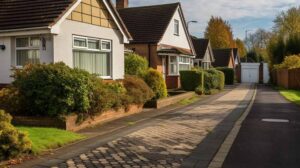
Do I Own the Verge Outside My House UK
Discover the intricacies of owning the verge outside your house in the United Kingdom and understand the laws surrounding pavement access. The ownership of the verge outside a property in the UK is

Can I Get a Dropped Kerb if Disabled?
Imagine navigating the world with limited mobility. Every curb becomes an obstacle, a barrier to your freedom and independence. But what if there was a solution? What if you could

Can I Block My Own Driveway?
Are you wondering if you can block your own driveway in the UK? Well, wonder no more! In this informative article, we will explore the legal considerations, permissible situations, and